Need Immediate Wholesale Quotes?
Chat directly with our export manager on WhatsApp for quick pricing, COA downloads, and batch availability.
Discover the science of thermal degradation, shade drying protocols, chlorophyll retention, and industrial quality standards for Moringa oleifera.
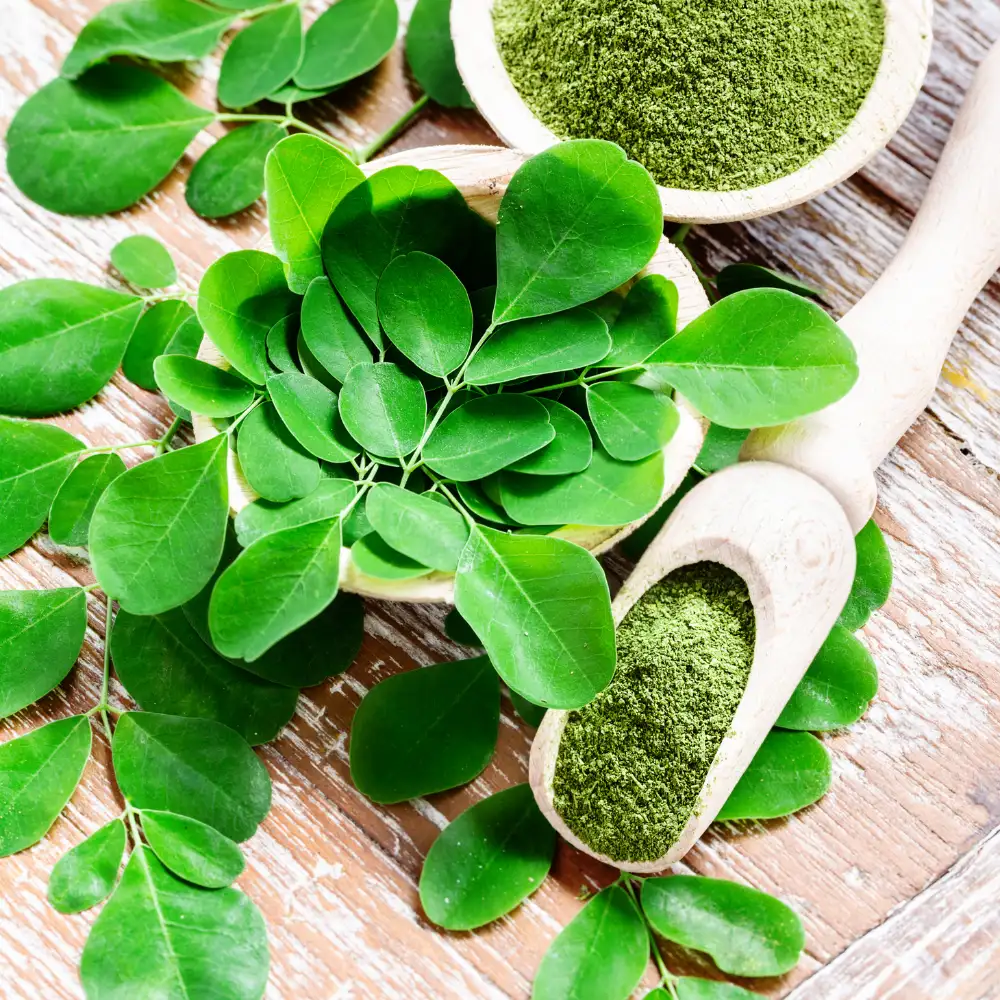
Moringa oleifera is widely celebrated as one of nature's most nutrient-dense superfoods, packed with essential vitamins, minerals, amino acids, and potent antioxidants. However, the therapeutic efficacy and commercial value of moringa powder depend entirely on the precision of its post-harvest drying process.
When moringa leaves are dried improperly—such as through direct exposure to intense sunlight or high-temperature mechanical heating—heat-sensitive nutrients rapidly degrade. Understanding the science of thermal preservation ensures that certified organic moringa powder retains its brilliant emerald color, active bioactives, and full nutritional integrity.
Drying is a critical preservation step designed to remove moisture and inhibit microbial growth. However, improper thermal exposure triggers enzymatic breakdown and photoxidation:
Ascorbic acid (Vitamin C) is highly thermolabile. Temperatures exceeding 60°C or direct solar radiation can destroy up to 30% to 50% of the leaf's original vitamin content.
Direct sunlight breaks down chlorophyll molecules, causing bright green leaves to turn dull brown and losing key antioxidant protection.
Chat directly with our export manager on WhatsApp for quick pricing, COA downloads, and batch availability.
The table below outlines how different post-harvest drying techniques directly affect nutrient retention and powder quality:
| Drying Method | Temperature Range | Nutrient Retention Rate | Visual & Commercial Output |
|---|---|---|---|
| Direct Sun Drying | 45°C – 65°C+ (UV Exposure) | 50% – 65% (High Vitamin Loss) | Brownish-green color, faded aroma, degraded bioactives |
| High-Heat Dehydration | Above 60°C | 60% – 75% (Thermal Loss) | Olive-green color, reduced Vitamin C & enzymes |
| Controlled Shade Drying | 35°C – 50°C (Low Temp) | 90% – 95% (Optimal Retention) | Vibrant emerald green, fresh grassy aroma, preserved bioactives |
| Freeze Drying (Lyophilization) | Below 0°C (Sublimation) | 98% – 100% (Maximum Retention) | Premium grade, high-cost specialized application |
To ensure premium export quality, SoilSaga Naturals adheres to strict low-temperature shade-drying standards:
Every batch of SoilSaga Organic Moringa Leaf Powder undergoes rigorous testing to meet strict international standards:
| Quality Parameter | US FDA / USP Standard | EU Organic Standard | SoilSaga Quality Benchmark |
|---|---|---|---|
| Moisture Content | Max 8.0% | Max 7.5% | Maintained below 6.0% for long stability |
| Heavy Metals (Pb, Cd, As, Hg) | Lead < 2 ppm | EC No 1881/2006 Compliant | Lead < 0.5 ppm / Multi-Metal Screen Passed |
| Color & Visual Grade | Natural Green | Vibrant Green | Vibrant Emerald Green (Low-Temp Dried) |
| Ethylene Oxide (ETO) | Below Action Level | Strictly Absent (< 0.02 mg/kg) | 100% Non-ETO / Organic Compliant |
Drying moringa leaves the right way is the bridge between raw botanical harvesting and delivering a true superfood. By avoiding direct sun exposure and controlling dehydration temperatures below 50°C, SoilSaga Naturals preserves the natural vitality, antioxidants, and complete nutritional value of Moringa oleifera for consumers worldwide.
Providing 100% certified organic, shade-dried Moringa Leaf Powder processed using low-temperature protocols to guarantee maximum nutrient density for global wholesale markets.
Direct UV sunlight breaks down chlorophyll and oxidizes heat-sensitive vitamins like Vitamin C and Beta-Carotene, turning the powder brown and reducing its nutritional value.
Maintaining drying temperatures below 50°C in shaded, ventilated conditions preserves up to 95% of delicate vitamins, enzymes, and antioxidants.
High-quality, correctly dried moringa powder has a vibrant emerald green color, a fresh grassy aroma, and fine texture. Brownish or dull powder indicates sunlight or excessive heat exposure.
Moringa powder should be dried to a moisture level below 6% to 7.5% to prevent microbial growth and ensure shelf stability.
Yes, SoilSaga Naturals supplies certified organic shade-dried moringa leaf powder tested for purity, heavy metals, microbial safety, and zero ETO.
Wholesale buyers can connect with the SoilSaga export team via the contact page to request batch Certificates of Analysis (COA) and export pricing.