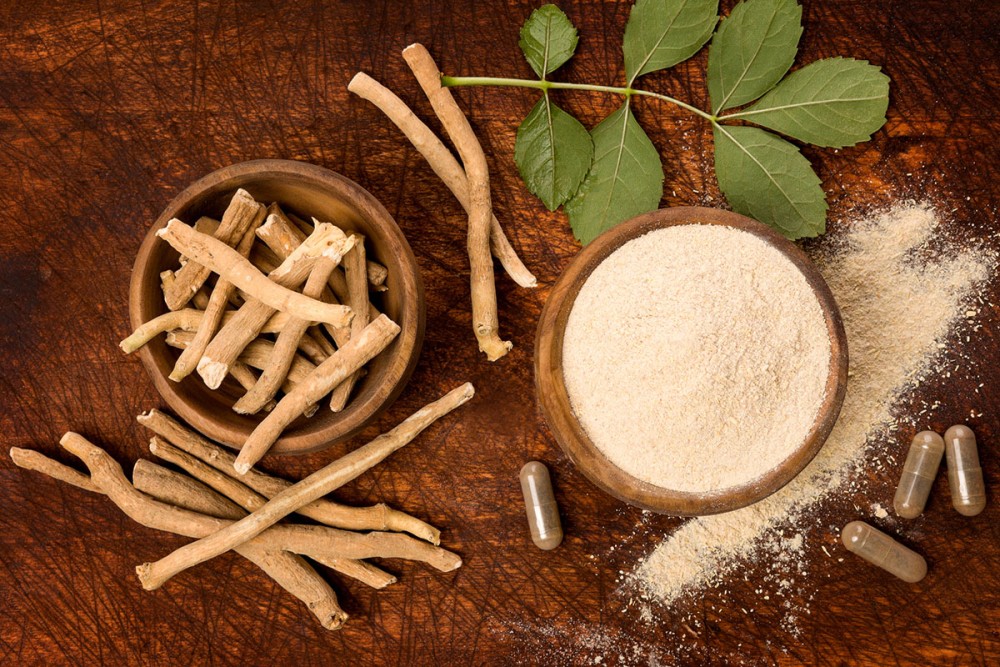
Industrial-grade, sun-dried Withania somnifera root, finely milled for nutraceutical and functional food manufacturing. Backed by full lot traceability, HPLC testing, and complete analytical documentation.
SoilSaga Naturals started with a simple but meaningful vision: to deliver India's finest organic botanicals directly to global manufacturers. We cultivate our own fields and collaborate with local Farmer Producer Organizations (FPOs) across fertile Indian agricultural belts.
Every batch of our Ashwagandha root powder carries the story of India's soil, soul, and sustainability delivering premium, clinically-backed adaptogenic wellness born from the land and trusted by B2B business partners worldwide.
At SoilSaga Naturals, we provide the wholesome power of Ashwagandha Powder, crafted from hand-harvested roots grown in pesticide-free, organic Indian soil. We strictly enforce a root-only policy, completely avoiding aerial parts (leaves and stems) to guarantee absolute adaptogenic authenticity for our international buyers in North America, Europe, and Asia-Pacific.
Empowering Smallholder Farmers
We support small-scale farmers by promoting sustainable agriculture and fair-trade practices, ensuring nutritional security and economic empowerment within rural Indian communities.
Advanced Moisture Control
Roots are dehydrated using low-temperature heat pumps and controlled shadow drying to protect thermolabile withanolides and prevent mold formation.
Integrated Global Supply Model
Complete control over farming, washing, milling, and sterilization allows seamless fulfillment of bulk commercial volumes and strict export documentation compliance.
Certified Lab Validation
Every shipment comes with batch-specific Certificates of Analysis (COA) detailing withanolide content, heavy metals, microbial clearance, and zero pesticide residues.
Complete 13 Step Farm to Export Shipping Pipeline
To meet strict import requirements in the USA, Europe, and Japan, SoilSaga Naturals follows an exhaustive 13-step end-to-end processing pipeline specifically engineered for Ashwagandha root:
Step 01 • Cultivation
Farm Stage Harvesting
Roots are excavated manually at peak maturity (150-180 days) to ensure maximum withanolide concentration without machinery damage.
Step 02 • Separation
Aerial Part Removal
Stems and leaves are strictly separated and discarded at the farm level. Only the primary and secondary taproots proceed.
Step 03 • Sanitization
High-Pressure Washing
Roots undergo multi-stage water jet cleaning in stainless steel vats to eliminate soil, heavy metals, and surface microbes.
Step 04 • Chopping
Uniform Root Slicing
Cleaned roots are mechanically sliced into uniform pieces (chips) to allow for consistent, even dehydration and prevent mold.
Step 05 • Blanching
Steam Blanching (Optional)
Depending on the extract profile required, roots may undergo a quick steam blanching to lock in specific bioactive matrices.
Step 06 • Moisture Control
Shadow & Sun Drying
Roots are dried under controlled, hygienic conditions to reduce moisture below 8% without degrading volatile compounds.
Step 07 • Cool Milling
Cryo-Milling Technology
Cool-jacketed stainless steel pulverizers grind the dried roots into powder without thermal degradation of active withanolides.
Step 08 • Sieving
Vibratory Air-Sieving
Ground powder passes through 80 to 100 mesh air sieves to eliminate micro-fibers and ensure a uniform, free-flowing particle size.
Step 09 • Purification
Inline Rare-Earth Magnets
Powder flows across 10,000+ Gauss inline rare-earth magnets to capture and eliminate microscopic metallic contaminants.
Step 10 • Pathogen Control
HT-ST Steam Sterilization
High-Temperature Short-Time steam sterilization kills pathogens (Salmonella, E. coli) without using toxic ETO gas.
Step 11 • Stabilization
Vacuum Fluidized Cooling
Sterilized powder is instantly cooled inside vacuum chambers to prevent moisture condensation and clumping prior to packing.
Step 12 • Packaging
Nitrogen Flush MAP Packing
Powder is vacuum-sealed in multi-layer foil liners with nitrogen flushing inside 25 kg bulk drums to prevent oxidation.
Step 13 • Logistics
Final Export Shipping & Compliance Documentation
Containers are packed under strict food-grade guidelines with full export traceability. Every shipment includes an APEDA Registration Certificate, Export-Oriented FSSAI License, Certificate of Origin, and batch-specific NABL Lab Reports (HPLC and heavy metals). For US markets, we ensure FDA-compliant labeling, and for EU markets, we provide strict compliance against pesticide residue limits alongside official Phytosanitary Certificates.
Commercial Product Specifications & Technical Data
SoilSaga supplies both Certified Organic and Conventional grades tailored for global procurement standards.
Technical Parameter
Export Specification
Botanical Name
Withania somnifera (Indian Ginseng)
Plant Part Used
100% Root Only (Strictly No Leaves/Stems)
Assay (Withanolides)
0.5% to 5.0% (HPLC / Gravimetric routes available)
Individual Filter Tea Bags, Retail Boxes, or Loose Bulk Bags
Export MAP (Modified Atmosphere)
Nitrogen flushed vacuum sealing in foil liners for extended ocean transit stability
Health Benefits & Bioactive Properties
The pharmacological action of Ashwagandha relies on steroidal lactones (Withanolides A-Y) and unique alkaloids:
Stress & Anxiety Relief: Functions as a GABA-mimetic, effectively lowering cortisol levels in the HPA axis to encourage relaxation and combat anxiety.
Cognitive Function & Focus: Facilitates choline production and mitigates oxidative stress, enhancing memory, focus, and overall neural communication.
Energy & Sports Stamina: Supports VO2 max, muscle recovery, and physical endurance without stimulant-induced crashes, helping combat fatigue.
Sleep Enhancement: Contains the alkaloid somniferine, which naturally promotes restful, deep sleep cycles and helps combat insomnia.
Hormonal & Thyroid Balance: Regulates thyroid function and balances reproductive hormones, supporting vitality and longevity.
Multi-Industry Commercial Applications
Nutraceuticals & Dietary Formulations
Formulated into adaptogenic capsules, stress-relief gummies, and daily multivitamin formulations.
Functional Foods & Beverages
Incorporated into energy bars, protein powders, pre-workout smoothies, and functional nootropic coffees.
Cosmetics & Personal Care
Added to anti-aging creams and skin inflammation treatments due to its potent antioxidant properties.
Traditional Ayurveda
Utilized as a premium raw material in herbal teas, restorative tonics (Rasayana), and botanical infusions.
KSM-66 vs. Standard Ashwagandha Powder
What is the difference between KSM-66 and regular ashwagandha root powder?
KSM-66 is a heavily branded, highly concentrated full-spectrum extract standardized to >5% withanolides, traditionally extracted using milk pretreatment, making it water-soluble and backed by clinical trials. However, it carries high licensing fees. SoilSaga Root Powder/Extract provides pure, unbranded root powder and standardized extracts (up to 5% HPLC). This offers immense cost-efficiency for formulators who need pure adaptogenic profiles and 100% vegan extracts (without milk pretreatment) without paying premium branded licensing fees. It is ideal for capsules, traditional blends, and custom extractions.
How to Verify Supplier COA Authenticity for Ashwagandha?
Verifying COA Authenticity for Ashwagandha
Ashwagandha is highly prone to economic adulteration (mixing cheap leaves into root powder). Use this 5-step process to verify your supplier's COA:
1. Verify the issuing lab
Look up the lab in the A2LA (a2la.org) or NVLAP public directory. Confirm the accreditation scope covers the specific methods cited on the COA (e.g., HPLC for withanolides, ICP-MS for heavy metals).
Call the lab directly using contact details you found independently (not from the COA). Provide the report number and lot number and ask them to confirm the document is genuine. This single step defeats most fabrication.
2. Check the document itself
Lot number must match the container label, purchase order, and shipping docs.
Dates must be internally consistent: COA issue date ≥ manufacturing date, and close to shipment date.
Results must be numeric, not "complies" or "pass" for every line. Real data shows natural variation (e.g., withanolides at 2.83% one lot, 3.11% the next) suspiciously identical values across lots are a fabrication tell.
Botanical taxonomy must be present: Withania somnifera (L.) Dunal, plant part (root), and form (whole powder / standardized extract).
Test methods must be cited for every parameter (e.g., "HPLC-UV per USP <563>" or "ICP-MS per USP <233>").
Named signatory with title, not a generic "QA approved."
Formatting: no font changes, misalignment, or editable-file artifacts.
3. Request raw data
Ask for the HPLC chromatogram for the withanolide assay and ICP-MS spectra for heavy metals. A supplier who can't produce them didn't run the test.
For identity: request HPTLC results against an authenticated reference standard, or DNA barcoding data.
Important: Standard withanolide assay alone cannot detect leaf/stem adulteration (a known issue with ashwagandha root powder).
4. Independent re-testing
Send a retained sample to a third-party ISO 17025 lab (e.g., Eurofins, Analytik, or a US-based contract lab) for confirmatory testing.
Compare results to the supplier's COA.
A potency gap of >15% below COA-stated value warrants a formal discrepancy investigation.
5. Build an ongoing process
Tier suppliers by risk (new, sole-source, or high-adulteration-history regions get full incoming testing every lot).
Trend analysis: maintain a database of COA results by lot over time. Look for implausibly stable values or sudden format/method changes.
Retain samples per 21 CFR 111.83 (at least 1 year past shelf life).
For high-value lots, consider split-sample testing at two different labs.
Ashwagandha-specific note: A COA showing "root material only" with a clean withanolide assay does not confirm root-only content leaves and stems share the same marker compounds. Only HPTLC fingerprinting or DNA barcoding can reliably detect aerial-part adulteration.
What is the cost of third-party testing?
Realistic Cost Breakdown for Ashwagandha Root Powder Lots
Test Method
Technology
Typical Cost per Lot
Potency / Withanolide assay
HPLC-UV
$150 – $400
Heavy metals (Pb, As, Cd, Hg)
ICP-MS
$100 – $300
Microbial panel (yeast, mold, pathogens)
Plate count / PCR
$100 – $250
Botanical identity (HPTLC)
HPTLC fingerprinting
$150 – $250
DNA barcoding
PCR + sequencing
$200 – $400
Pesticide residue panel
GC-MS / LC-MS
$150 – $300
Moisture / ash / mesh
Gravimetric / sieve
$50 – $100
Full comprehensive panel (potency + heavy metals + microbial + identity): roughly $500 – $1,200 per lot at an ISO 17025 lab like Eurofins, NJ Labs, or Ayah Labs.
Factors that shift the price:
Expedited turnaround (48–72 hr vs. 5–7 business days): +25–50% surcharge
Sample quantity: most labs require 100–250 g minimum; extra sample for retention adds $20–$50
Method development: if the lab hasn't previously validated HPLC for Withania somnifera root powder specifically, expect a one-time $500–$2,000 method development fee
Volume discounts: testing 10+ lots/year often gets 10–20% off
USP compendial testing (e.g., USP <561> identity, <233> elements) is slightly more than non-compendial equivalents
What is the difference between HPLC and HPTLC?
HPLC vs. HPTLC Technical Comparison
Both separate compounds based on differential affinity for a stationary vs. mobile phase, but they differ fundamentally in format:
Feature
HPLC
HPTLC
Format
Column-based, closed system, pump-driven flow
Planar (flat plate), open system, capillary migration
Stationary phase
Solid packed in a tubular column (e.g., C18)
Thin silica layer on a glass/plastic plate
Phase mode
Usually reverse-phase (polar mobile / nonpolar stationary)
Usually normal-phase (nonpolar mobile / polar stationary)
Pressure
High (up to ~400 bar)
Atmospheric
Resolution
Very high
Moderate to high
Quantification
Excellent (±2%), follows Beer's Law
Good (±2%), uses diffuse reflectance (not Beer's Law)
Fingerprinting
Limited (one peak at a time)
Visual — entire chromatogram is a picture; easy side-by-side comparison
Throughput
One sample at a time
Multiple samples in parallel on one plate
Solvent use
100–300 mL per sample
2–4 mL per sample
Sample prep
Extensive (filtering, dilution, degassing)
Minimal
Cost per run
Higher (column wear, solvents, maintenance)
Lower (disposable plate, less solvent)
Turnaround
Slower (2–4 hr per sample incl. equilibration)
Faster (1–30 min, on-demand)
Why both matter for ashwagandha:
HPLC-UV is the go-to for quantifying withanolides (withaferin A, withanolide D, etc.) it's more sensitive and precise for a single target compound.
HPTLC fingerprint is the go-to for botanical identity and adulteration detection, you get a visual "fingerprint" of the entire extract that you compare side-by-side against a reference standard. This is what makes it possible to detect leaf/stem adulteration in "root powder," because the overall band pattern shifts when aerial parts are mixed in. A single-marker HPLC assay won't catch that.
What makes us better than other ashwagandha suppliers?
100% Root Authenticity Guarantee
We do not blend cheap aerial leaves to artificially spike withanolide tests. Our material passes strict HPTLC visual fingerprinting to prove 100% root authenticity to global manufacturers.
Farm-Direct Supply Chain
By bypassing middlemen and sourcing directly from our organic contract farmers in India, we ensure zero economic adulteration and highly competitive B2B wholesale pricing.
Non-ETO Steam Sterilization
We utilize advanced High-Temperature Short-Time (HT-ST) dry steam sterilization. This ensures total microbial safety without relying on toxic Ethylene Oxide (ETO) gas or irradiation.
Complete Transparency
Every lot is shipped with full NABL-accredited third-party Lab COAs (Heavy Metals, Microbial, HPLC), complete USDA/EU Organic transaction certificates, and raw chromatogram data upon request.
Global Compliance & Regulatory Standards for Export
For export, SoilSaga prioritizes and holds critical certifications required by international procurement desks:
FSSAI Central License: Mandatory for processing and exporting ashwagandha powder or capsules from India.
WHO-GMP: Required to ensure consistent quality and hygiene in pharmaceutical-grade or supplement production.
HACCP / ISO 22000: Demonstrates robust hazard analysis and food safety systems, strictly demanded by international enterprise buyers.
Halal & Kosher: Essential for seamless market access in the Middle East, Southeast Asia, and specific religious dietary segments.
US FDA Registration: Required for exporting raw dietary supplements and nutraceutical ingredients to the United States.
How should Organic Ashwagandha Root Powder be stored?
To maximize the 24-month shelf life and preserve the volatile withanolides, Ashwagandha root powder must be stored correctly:
Temperature & Light: Store in a cool, dark, dry place (ideally below 25°C / 77°F) away from direct sunlight, which can degrade phytochemicals.
Moisture Control: Powder is highly hygroscopic. Keep bulk drums tightly sealed. SoilSaga provides products in double inner food-grade poly liners or nitrogen-flushed vacuum-sealed MAP foil bags to prevent moisture ingress.
Compliance: For manufacturers, retain samples in their original packaging per 21 CFR 111.83 (at least 1 year past shelf life) in a climate-controlled facility.
EXPORT INQUIRY & BULK SUPPLIES
Request B2B Quotation (RFQ)
Bulk Ashwagandha (Withania somnifera) from India. Root powder and extract routes; withanolide assay, documentation and commercial terms are confirmed by product route. Pricing is strictly on quote depends on volume, certifications, and packaging.
Connect directly with SoilSaga Naturals' export desk. We supply wholesale quantities to North America (USA, Canada), Europe (UK, France, Germany, Spain, Italy), Asia-Pacific (Japan, South Korea, Singapore), and Australia.
✓ Batch Specific Certificate of Analysis (COA)
✓ Organic Certificates (USDA NOP, EU, NPOP)
✓ Heavy Metal & Pesticide Test Reports
✓ Custom OEM & Private Label Quotations
No. We maintain a strict root-only extraction policy in accordance with traditional Ayurvedic texts and modern clinical standards. We do not use leaves, which contain differing phytochemical profiles and elevated levels of Withaferin A. Our material is verifiable via HPTLC.
Our premium extracts are standardized using accurate High-Performance Liquid Chromatography (HPLC) and gravimetric methods to guarantee exact percentages of withanolides (ranging from 0.5% to 5% based on specific buyer requirements).
Our standard bulk MOQ starts at 25 kg (shipped in standard fiber drums). For commercial contract manufacturing, scalable container load volumes are readily available.
Yes. Every single shipment is accompanied by a batch-specific COA detailing heavy metal compliance (USP <232> limits), microbiological safety, moisture levels, and confirmed withanolide percentages backed by NABL-accredited lab reports.
SoilSaga owns the supply chain from grassroots farm networks in India directly to export. By eliminating middlemen, we ensure zero adulteration, provide 100% organic traceability, and offer competitive direct-to-manufacturer pricing with strict compliance to US FDA, FSSAI, WHO-GMP, and EU regulations.