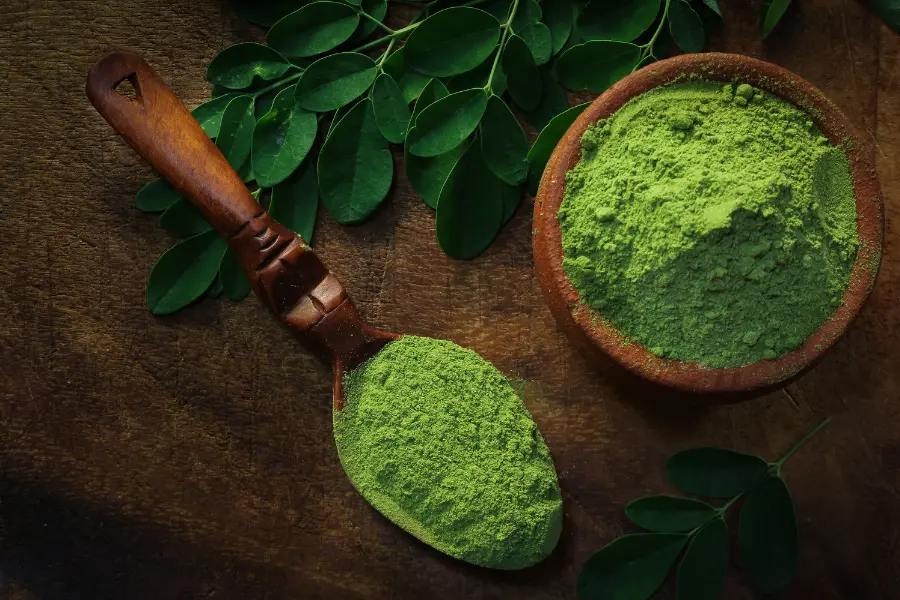
Product Specifications & Bulk Export Terms (The Buy Zone)
Global B2B buyers and formulators cannot rely on generic botanical marketing. If your supplier fails to explicitly state their milling mesh size, dehydration temperature, or provide an active Certificate of Analysis (COA) for Lead and Arsenic, your shipment risks rejection at international ports.
| Specification Parameter | Soil Saga Export Standard |
|---|---|
| Organic Certification | NPOP Verified (EU & USDA Equivalent) |
| Dehydration Protocol | Strictly <40°C (Climate-controlled shade drying) |
| Milling / Mesh Size | 80-Micron (Micro-milled, superior solubility) |
| Botanical Parts Used | 100% Leaf Only (0% Stem/Lignin content) |
Why Standard Moringa Powder Fails Import Quality Checks
The Bioaccumulation Problem (Heavy Metal Customs Rejections)
Moringa oleifera is a known hyperaccumulator used globally in phytoremediation. The tree aggressively pulls nutrients from the earth, but equally absorbs heavy metals (Lead, Arsenic, Cadmium) if grown in industrialized agricultural zones. Unverified bulk powders consistently fail customs clearance in the EU and US due to exceeding stringent heavy metal limits.
Sun-Drying vs. Shade-Drying (Nutrient Oxidation)
Ascorbic Acid (Vitamin C) and Chlorophyll are highly sensitive to thermal degradation. Standard commercial sun-drying exposes leaves to uncontrolled temperatures exceeding 65°C. This rapid processing method denatures vital enzymes, oxidizes the chlorophyll, and destroys up to 70% of the naturally occurring Vitamin C, yielding an inferior, oxidized powder.
Stem Contamination and Microbiological Load
Fibrous stems and twigs are composed of tough cellulose and lignin. Low-tier processors grind these woody parts alongside leaves to artificially inflate batch weight. High lignin content not only causes formulation issues but significantly elevates the microbiological load (Total Plate Count), risking import quarantine.
Soil Saga Processing Parameters
Export-grade purity is engineered at the soil level and protected through strict thermodynamics. Here is exactly how we cultivate, process, and mill our organic moringa to meet pharmaceutical-grade baselines.
Soil Testing and Harvesting Protocols
Cultivated exclusively in isolated, NPOP-certified organic zones away from industrial runoff. Leaves are hand-harvested at dawn to ensure maximum cellular turgor pressure and minimal heat stress prior to processing.
Low-Temperature Dehydration Metrics (<40°C)
Leaves enter climate-controlled, UV-shielded drying rooms. Ambient thermodynamic data logs prove temperatures never exceed 40°C (104°F), utilizing high-velocity cross-ventilation to remove moisture while protecting enzyme viability.
Milling, Sifting (80-Mesh), and Moisture Control (<8%)
Processed via stainless-steel cryogenic milling to prevent mechanical heat degradation. Sifted strictly through an 80-micron screen. Final batch moisture content is capped strictly below 8% to arrest microbial proliferation (mold/yeast) during transit.
The Chemistry of Color: Chlorophyll Oxidation
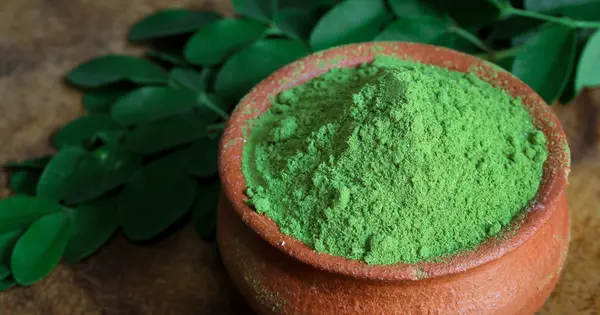
Color is a direct biomarker of chemical integrity. When moringa leaves are exposed to temperatures exceeding 50°C, the magnesium ion at the center of the chlorophyll molecule is displaced. This converts vibrant green chlorophyll into dull, olive-brown pheophytin. If an imported powder is brownish-yellow, it has undergone severe thermal degradation.
Batch-Level Certificates of Analysis (COA)
B2B formulation requires unedited documentation. We utilize independent, NABL-accredited laboratories for every commercial export batch. Our COAs cover exhaustive microbiological screening (Total Plate Count, E. coli, Salmonella) and stringent heavy metal panels via ICP-MS.
COA BATCH #ML-2408
NABL Accredited Lab Report • Pass: Heavy Metals • Pass: Microbials
View/Download Full PDF DocumentPharmacopeial Baselines for Heavy Metals
To ensure unimpeded customs clearance globally, we strictly adhere to the combined heavy metal tolerances established by USP (United States Pharmacopeia) <232> and FSSAI guidelines for botanical dietary supplements.
| Heavy Metal Element | USP/FSSAI Max Limit | Soil Saga Target |
|---|---|---|
| Lead (Pb) | < 10.0 ppm (mg/kg) | < 3.0 ppm (Often undetected) |
| Arsenic (As) | < 3.0 ppm (mg/kg) | < 1.0 ppm |
| Cadmium (Cd) | < 1.5 ppm (mg/kg) | < 0.5 ppm |
| Mercury (Hg) | < 1.0 ppm (mg/kg) | < 0.1 ppm |
Verified Nutritional Baseline (Per 100g)
| Nutritional Component | Verified Average Value (per 100g) |
|---|---|
| Crude Protein (Bioavailable) | 25.0 g - 28.0 g (Complete amino acid profile) |
| Calcium | ~ 2,000 mg |
| Iron | ~ 28.0 mg |
| Vitamin C (Ascorbic Acid) | ~ 17.3 mg (Preserved strictly via <40°C processing) |
Standardized Solubility & Formulation
Solubility is the ultimate test of commercial milling quality for beverage and capsule formulators. Because our powder is micro-milled to an exacting 80-mesh size, it features hydrophilic properties that resist clumping.
Unlike poorly sifted 40-mesh products that settle rapidly like wet sand, Soil Saga's 80-mesh moringa suspends effortlessly in liquids, ensuring a smooth mouthfeel and seamless integration into automated encapsulation equipment.
Storage Kinetics & Degradation Curves
Due to the hygroscopic nature of 80-mesh powder, improper transit and storage accelerates oxidative degradation. To maintain the chemical baseline established in our COAs, bulk shipments are protected using moisture-barrier liners. Once received at your facility, the powder must be stored below 25°C and strictly shielded from direct light. Under these conditions, the degradation curve of bioactives is flattened, ensuring formulation efficacy for 24 months.
Bulk Packaging & Global Export Logistics
Moisture-Barrier Liners & Pallet Configuration
Bulk orders are packed in heavy-duty 20kg or 25kg corrugated master cartons lined with high-density polyethylene (HDPE) food-grade moisture barrier bags. Pallets are shrink-wrapped and corner-protected to withstand ocean freight conditions.
FOB/CIF Terms, MOQs, & Lead Times
We offer flexible INCOTERMS including FOB (Nhava Sheva / Chennai Port) and CIF to major global ports. Our standard Minimum Order Quantity (MOQ) is 100 KG. Production and customs clearance lead time is typically 15-21 days depending on port congestion.
International Compliance & Export Documentation
NPOP, EU Organic, & Phytosanitary Certificates
Every export consignment is accompanied by a complete suite of commercial documents to guarantee seamless customs clearance:
- Commercial Invoice & Packing List (Detailed HS Code 121190)
- Certificate of Origin (COO)
- Phytosanitary Certificate (Issued by the Plant Quarantine Authority of India)
- Organic Transaction Certificate (TC) (Validating NPOP/EU/USDA equivalence)