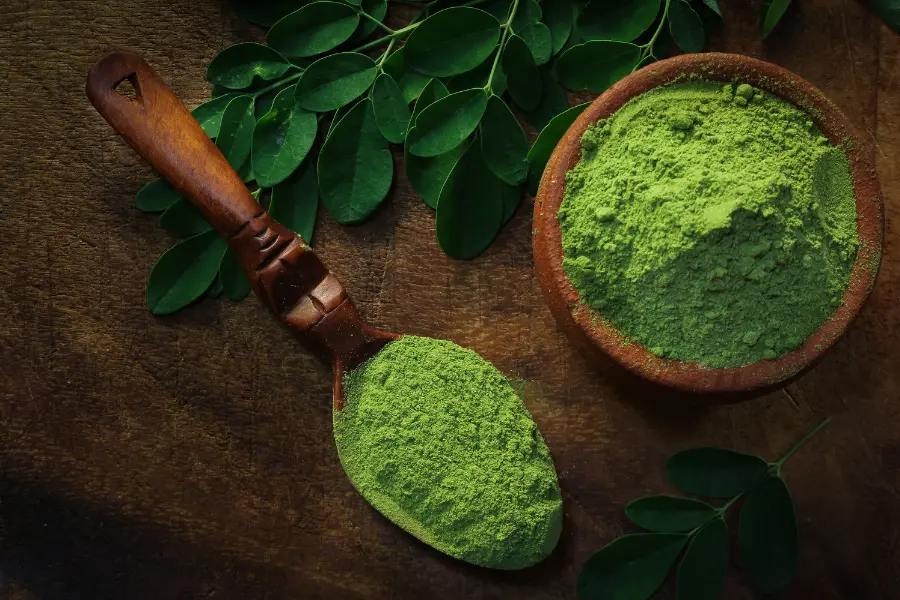
A useful moringa powder moisture specification sets a measurable moisture ceiling alongside particle size, contamination limits, packaging, and the exact certificate of analysis required for every lot. Moringa Powder Supplier can help buyers turn those requirements into a purchase-ready specification before sampling and contract approval.
Quick answer: how to set a moringa powder moisture specification
Use this workflow before approving a bulk order:
Moringa powder specification table for bulk buying
The figures below are practical buyer targets for finely milled Moringa oleifera leaf powder. They are commercial specification starting points rather than universal legal limits. Your formula, destination country, certification claims, and intended use may require tighter values.
| Parameter | Practical specification target | Why the limit belongs in the purchase specification |
|---|---|---|
| Moisture | Maximum 8.0% | Supports flowability, color retention, and shelf-life control |
| Particle size | 80 to 100 mesh, or defined pass rate | Controls mouthfeel, capsule filling, dispersion, and texture |
| Total ash | Maximum 12.0% | Monitors total mineral residue from the leaf material |
| Acid-insoluble ash | Maximum 2.0% | Flags sand, soil, and silica contamination |
| Total plate count | Maximum 100,000 CFU/g | Indicates hygienic handling and microbial load |
| Salmonella | Absent in 25 g | Core pathogen control point for food and supplement ingredients |
Use “maximum” and “absent” language in the signed specification. Avoid terms such as “low moisture,” “food grade,” or “export quality.” They leave too much room for interpretation.
Nutritional and Functional Properties of Moringa oleifera
Moringa Leaf Powder Proximate Composition
Establishing a product specification for Organic Moringa Leaf Powder requires understanding its proximate baseline. Structurally, premium pure leaf powder delivers high bioavailable crude protein (often 25-28%), exceptional dietary fiber, and essential amino acids. Deviations in proximate composition—such as unexpectedly low protein or high fibrous bulk—often indicate adulteration with twigs, petioles, or fillers.
Nutritional Composition and Consumer Acceptability
How to set the moisture limit for moringa powder
For most bulk leaf powder, 8.0% maximum moisture is a sound commercial ceiling. It balances powder stability with realistic post-drying handling in tropical producing regions. Buyers seeking very fine powder, long sea transit, or sensitive supplement packaging often choose a tighter internal target, such as 7.0%, provided the supplier can achieve it without excessive heat exposure.
Drying Characteristics Of Moringa Leaves
The thermodynamic drying characteristics of the leaf dictate final moisture and quality. Industrial shade-drying at strictly controlled temperatures (below 40°C) is required to safely drop moisture levels without degrading sensitive enzymes. Rapid, high-heat dehydration causes case-hardening of the leaf cellular structure, trapping internal moisture which later leads to condensation and microbial bloom during transit.
State the test method. Loss on drying and moisture analyzers can produce different results when laboratories run different temperatures and hold times. Ask the supplier to list the method on the COA and use the same approach for the pre-shipment sample and final lot.
Specify mesh and ash for the intended application
Mesh is an application decision. A 60-mesh powder can work in rustic food blends, while 80 to 100 mesh is usually easier to disperse in drink mixes, fill into capsules, and incorporate into a smooth facial mask. Finer milling creates a lighter powder feel, though it can increase dust.
Ash requires two lines on the COA:
- Total ash captures the full inorganic residue remaining after controlled incineration.
- Acid-insoluble ash focuses on residue that fails to dissolve in acid, including sand, soil, and silica.
Value Added Products in Moringa Formulation
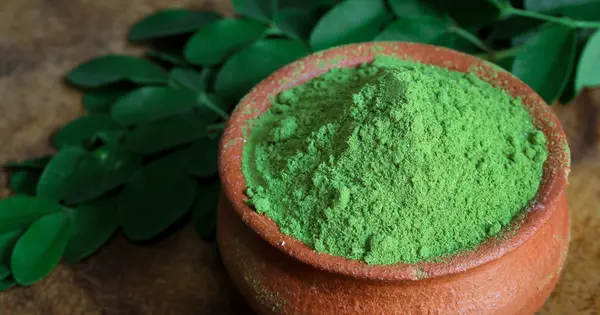
Standardized specifications unlock the potential for value-added products in moringa commercialization. Beyond raw bulk export, highly controlled 80-100 mesh powder with guaranteed microbiological safety serves as the fundamental base for advanced formulations: encapsulated nutraceuticals, pressed superfood tablets, fortified cosmetics, and cold-pressed oil extraction residuals.
Set microbiology and steam sterilization requirements
Microbiology limits should match the finished use and your internal hazard assessment. A raw powdered botanical can carry organisms from soil, water, workers, equipment, and post-drying exposure. Require a lot-specific COA with total plate count, yeast and mold, E. coli, and Salmonella results.
Effect of Boiling, Steaming, and Autoclaving Methods
For pathogen control, specify “Salmonella absent in 25 g” and request the laboratory report for the actual lot. The FDA guidance on Salmonella in spices is also relevant to dry botanical ingredient risk management.
Review heavy metals and pesticide residues by market
Heavy-metal limits belong in every moringa powder specification because leaves can accumulate contaminants from soil, irrigation water, dust, and nearby industrial activity. Ask for lead, cadmium, arsenic, and mercury results in mg/kg, generated by ICP-MS or an equivalent validated method.
Comparison of Eleven Heavy Metals in Moringa Oleifera
Extensive toxicological evaluation of heavy metal contamination in global moringa supplies reveals varying rates of elemental uptake. A robust specification must set hard caps to prevent chronic toxicity: Lead (Pb) Max 3.0 mg/kg, Cadmium (Cd) Max 1.0-3.0 mg/kg, Total Arsenic (As) Max 3.0 mg/kg, and Mercury (Hg) Max 0.1 mg/kg.
Evaluation of Heavy Metal Contamination and Toxicological Impact
Comparing these limits against generic datasheets protects brands from regulatory seizures. Pesticide testing requires more than a statement of “pesticide free.” Request a multi-residue laboratory report that identifies the analytes tested, reported results, detection or quantification limits, method, sample date, and laboratory.
Batch-Level Certificates of Analysis (COA)
B2B formulation requires unedited documentation. We utilize independent, NABL-accredited laboratories for every commercial export batch. Our COAs cover exhaustive microbiological screening (Total Plate Count, E. coli, Salmonella) and stringent heavy metal panels via ICP-MS.
COA Batch Report
NABL Accredited Lab Report • Pass: Heavy Metals • Pass: Microbials
VIEW/DOWNLOAD FULL PDF DOCUMENTWorked example: turning a vague request into a specification
Consider a U.S. supplement brand preparing a 500 kg order for green moringa capsules. Its first request says: “Organic moringa powder, fine mesh, low micro, 24-month shelf life.” The supplier sends a sample with strong green color and a 7.6% moisture result. The brand approves the appearance and then discovers that the COA lists only total plate count, with no Salmonella result and no acid-insoluble ash value.
The buyer should pause approval and issue a controlled specification sheet. For this case, set moisture at 8.0% maximum, at least 95% passing 80 mesh, total ash at 12.0% maximum, acid-insoluble ash at 2.0% maximum, total plate count at 100,000 CFU/g maximum, and Salmonella absent in 25 g. Add four-metal ICP-MS results, a destination-appropriate pesticide panel, and 24 months only in sealed moisture-barrier packaging.
How Moringa Powder Supplier turns buyer requirements into a sourcing brief
Next, we align the requested grade and testing scope with the buyer’s target market. Request a representative sample and evaluate it against the written criteria, including color, aroma, flow, dispersibility, and lab documentation. Once approved, carry the identical limits into the purchase order and require the final lot COA before loading.
Common mistakes when sourcing moringa
Red Flags to Check Before Buying
Failure to identify filler materials is a critical sourcing mistake. Buyers frequently overlook morphological markers. Red flags include a pale, yellowish tint indicating heat damage, or a gritty texture revealing high stem and petiole content. A true specification mandates 100% pure leaf only.
Recognizing Pure Organic Moringa Powder in India
Authenticity is validated via botanical identity testing and ensuring the absence of solvent residues. Relying solely on a generic organic logo without lot-specific transaction certificates is a widespread error.
Storage Kinetics & Humidity Control
Best Ways to Store Moringa Powder in Humid Indian Climate
Hygroscopic botanical powders rapidly absorb moisture in humid climates, driving the internal moisture past the 8.0% threshold and triggering mold growth. The best storage methodology requires double-sealed HDPE liners housed in corrugated master cartons, completely elevated off concrete floors to prevent thermal bridging and condensation.
Different Temperature Storage Conditions and Packaging
Questions Suppliers Fail to Answer (FAQ)
Set a maximum moisture content of 8.0% for standard bulk moringa leaf powder. Tighter targets can suit long transit, fine milling, or sensitive finished products, provided the supplier confirms the drying process and packaging can consistently meet them.
An 80 to 100 mesh powder is a common practical range for capsules. Confirm the capsule machine’s filling behavior with a representative sample, since bulk density and flow also affect production performance.
Include total ash and acid-insoluble ash. Total ash measures total inorganic residue, while acid-insoluble ash provides a clearer signal of soil, sand, and silica contamination.
Request testing frequency and lot coverage that reflect your market, supplier risk assessment, and certification program. A full multi-residue report for each production lot offers the strongest shipment-level evidence.
Shelf life after opening depends on humidity exposure, handling frequency, and the reseal quality of the package. Transfer the powder to a tightly sealed moisture-barrier container, keep it cool and dry, and use a lot-specific retained sample to investigate any change in color, odor, or flow.