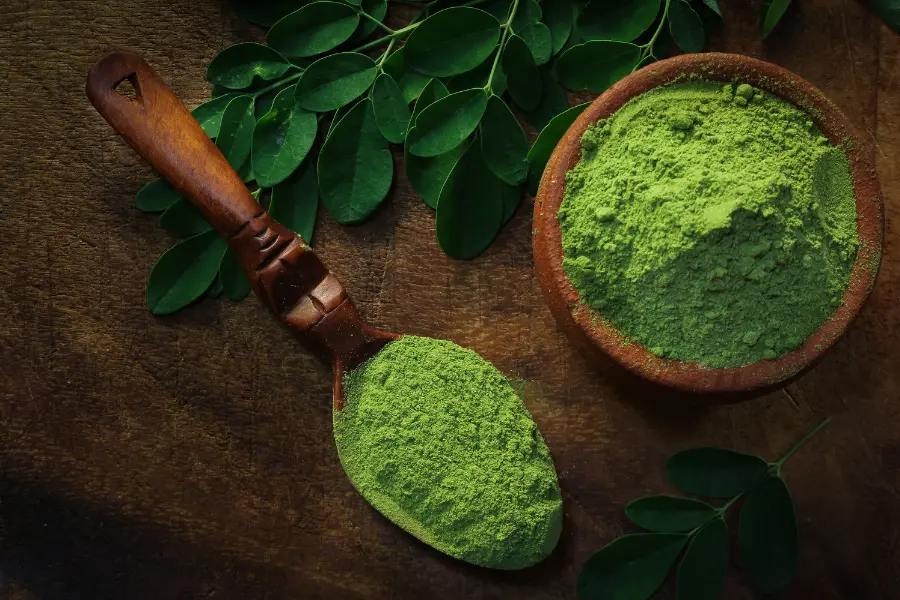
Two moringa powders can look nearly identical in online photos while differing in age, storage conditions, plant parts, contamination controls, and traceability. A bright green package and an organic claim do not resolve those questions.
At SoilSaga Naturals, we use an evidence-first rule: trust batch-specific records more than color, marketing claims, or review counts.
Quick answer: how to check moringa powder quality
Use these checks in order before placing an order:
Consider an illustrative comparison between two unnamed 200 g pouches. Pouch A costs $14 and provides a lot number, recent packing date, manufacturer address, single-ingredient label, and matching laboratory report. Pouch B costs $10, looks greener in its edited listing photo, and carries broad claims such as “premium detox superfood,” but has no visible batch code or test report. Pouch A offers stronger evidence even if Pouch B has more marketplace reviews.
Check the moringa powder ingredient list first
The front of the package is advertising space. Turn to the ingredient panel or open the full label image online.
For ordinary leaf powder, the ingredient should be listed as “Moringa oleifera leaf powder” or equivalent wording. This confirms both the species and plant part. “Moringa powder” is less precise because moringa seeds, roots, bark, leaf extracts, and whole leaves are not interchangeable.
Check whether anything has been added. Sweeteners, flavors, fillers, preservatives, vitamins, or other herbs turn the product into a blend. That may be intentional, but the product should not be compared directly with pure leaf powder on price, serving size, taste, or nutrition.
Pay attention to extract language as well. A standardized extract is processed differently from dried, ground leaves. It may list an extraction ratio or a target compound. An extract is not automatically better, and a plain leaf powder is not automatically weaker. They are different products.
In the running example, Pouch A states “100% Moringa oleifera leaf powder.” Pouch B says “moringa superfood mix” on the front, while its complete ingredient panel is missing from the listing. That omission is enough to pause the purchase. Ask for a clear photograph before paying.
Check moringa powder color without relying on it
Good moringa leaf powder is commonly green, muted green, or olive-green. Shade varies with leaf maturity, drying temperature, grinding, growing conditions, storage, and photography. There is no single correct shade that proves freshness.
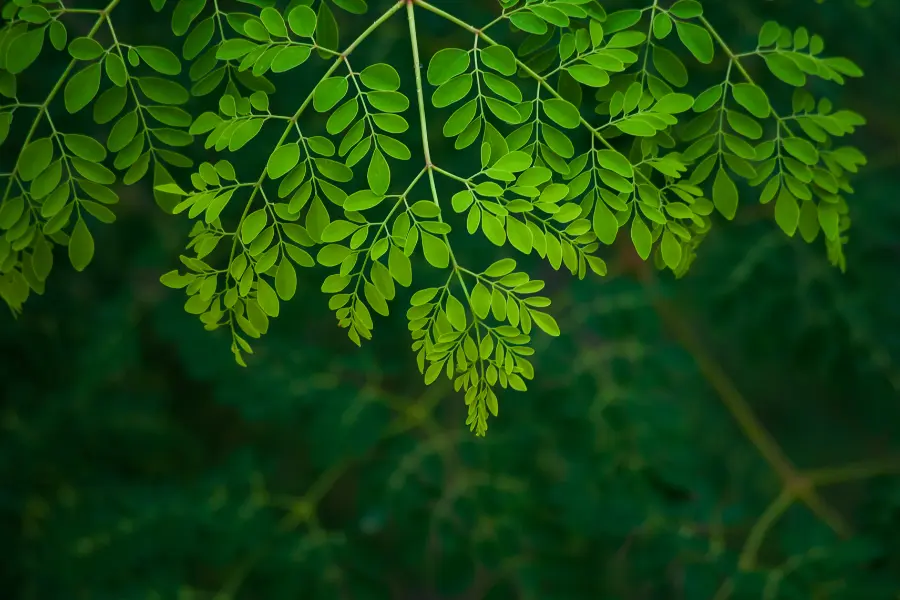
A strongly brown, gray, or straw-colored powder can indicate old material, oxidation, excess heat during drying, moisture exposure, or a high proportion of stems. It can also result from poor lighting. Confirm the color after opening the product in indirect daylight rather than under a warm kitchen bulb.
Very vivid green powder is not conclusive either. Sellers can increase saturation in product images, and screen settings affect appearance. Color cannot reveal pesticide residues, disease-causing microorganisms, or heavy metals. Those require testing.
Compare the powder with the seller’s own recent batch photographs if available. Consistency between the listing, the sealed package, and the contents is useful. A modest natural variation between lots is expected because moringa is an agricultural material.
For Pouch B, the intense green listing image initially looks persuasive. A customer-uploaded package photo, however, shows a much duller product and a different label design. That does not prove the powder is unsafe, but it raises questions about whether the listing images represent the current lot.
Use smell and texture as quality checks after delivery
You cannot smell a sealed online purchase before ordering, so treat aroma as an acceptance check when it arrives. Open the package in a dry room and note the smell before mixing the powder with anything.
Moringa leaf powder normally has a mild grassy, leafy, earthy, or tea-like aroma. It should not smell musty, damp, fermented, sharply sour, smoky, chemical, or rancid. A stale odor may point to age, poor drying, moisture exposure, or unsuitable storage.
The powder should be dry and reasonably fine. Small soft clumps can form through compression, particularly in vacuum-packed bags. Hard clumps, visible moisture, webbing, insects, foreign particles, or fuzzy growth are rejection signs. Do not taste powder that appears contaminated.
Taste is naturally earthy and somewhat bitter. An unexpectedly sweet or heavily flavored taste can suggest added ingredients, although taste cannot identify a specific contaminant. Home sensory checks help detect obvious defects. They cannot replace a laboratory report.
When Pouch A arrives, its seal is intact and the contents smell grassy. The powder has one soft clump that breaks apart with a spoon. That is less concerning than a damp, hard mass. Record the batch number and take photographs before contacting the seller if anything seems wrong.
Inspect moringa powder packaging for light and moisture protection
Moringa powder deteriorates when repeatedly exposed to moisture, heat, air, and light. Packaging should limit those exposures through distribution and normal household use.
An opaque pouch or container provides better light protection than a fully clear bag. A small viewing window is not an automatic failure, but it increases exposure if the product sits under strong retail lighting. The package should also have an intact heat seal, induction seal, tamper band, or comparable first-opening protection.
A resealable closure matters after opening. Thin zip tracks often collect powder and stop closing properly, so test the seal and move the product to a clean, airtight container if necessary. Do not reuse a jar that is still wet after washing.
Check for punctures, split seams, powder trapped in the shipping box, swelling, or water damage. Reject a package with broken tamper evidence even when the inner powder looks normal.
Packaging claims deserve the same scrutiny as ingredient claims. “Food grade,” “eco-friendly,” and “premium barrier pouch” are not meaningful without enough detail to evaluate them. The practical questions are whether the package arrived intact and whether it protects the powder during its stated shelf life.
Verify moringa powder batch details and dates
Traceable food products identify the batch. The package should show a lot or batch code that connects the item to manufacturing, packing, and testing records.
Look for the manufacturer or packer name and address, net quantity, country of origin where required, manufacturing or packing date, best-before or expiration date, storage instructions, and customer contact information. Requirements vary by country, but missing basic identification is a warning sign.
A date printed only on a removable marketplace sticker is weaker than a date marked by the producer. Check whether the lot code appears professionally printed, ink-jetted, or embossed rather than added over an older label. Smudged printing may be innocent, but a seller should be able to explain it.
Products sold in India should display the applicable FSSAI licensing information. Buyers can check a food business through the official FoSCoS portal. A valid license confirms that a business is registered or licensed under the relevant system. It does not prove that every batch is contaminant-free.
Return to Pouch A. Its report says lot ML-2408, while the package says ML-2408A. The codes are similar but not identical. Do not assume they match. Ask the seller to confirm the relationship in writing or provide a report carrying the exact package code.
| Evaluation Metric | Pouch A (Traceable Example) | Pouch B (Marketing Example) |
|---|---|---|
| Price per 200g | $14.00 | $10.00 |
| Ingredients Listed | 100% Moringa oleifera leaf powder | "Moringa superfood mix" (No full panel) |
| Batch / Lot Code | Visible: ML-2408A | None visible on packaging |
| Lab Report (COA) | Provided (Matching pending on 'A' suffix) | None provided / Generic Claims |
Understand what moringa certifications do and do not prove
Certification logos can support a buying decision when they are current, relevant, and verifiable. They should not be treated as substitutes for batch testing.
Organic certification addresses how agricultural ingredients are produced and handled under a defined standard. For products carrying a USDA organic claim, the USDA explains the permitted label categories and wording. Other markets operate under their own systems.
Verify the certification number, certified company name, covered product, and validity period. A certificate issued to a farm may not automatically cover a separate processor or brand. Likewise, a processor’s certificate may not identify the source farm.
Manufacturing certifications usually concern facility systems and documented processes. They can indicate that the company follows defined controls, but they do not tell you the lead concentration or Salmonella result for the pouch in your hand.
Laboratory accreditation is another separate issue. ISO/IEC 17025 concerns the competence of testing and calibration laboratories, as described by the International Organization for Standardization. Accreditation strengthens confidence in a laboratory’s methods and quality system, but you still need a report for the correct sample and lot.
Request a batch-specific moringa powder lab report
A useful certificate of analysis, often called a COA, should identify the product, lot number, sample date, report date, test methods, specifications, results, and laboratory. A generic document titled “moringa powder test report” with no matching batch offers limited assurance.
For an ingestible leaf powder, ask about microbiological testing such as total aerobic count, yeast and mold, Escherichia coli, and Salmonella. The appropriate panel and limits depend on the product category and market. Heavy metal testing commonly covers lead, arsenic, cadmium, and mercury. Pesticide screening may be especially relevant for a product making organic or residue-free claims.
Read the result column, not just the word “pass.” If a result says “ND,” find the method’s detection or reporting limit. “Not detected” means the laboratory did not detect the substance above that limit. It does not mean absolute zero.
Check dates closely. A report from several years ago may describe the seller’s general testing program, not the current stock. A current COA with the wrong lot is also insufficient.
Here is a practical evidence hierarchy for comparing two products:
| Quality check | Strong evidence | Weak evidence | What it cannot prove |
|---|---|---|---|
| Ingredients | Complete back-label image naming Moringa oleifera leaf powder | “Pure moringa” on the front | Absence of undeclared contamination |
| Color | Natural-looking batch photo plus acceptable product on arrival | Saturated studio image | Microbial or chemical safety |
| Packaging | Opaque, intact, sealed pack with storage directions | Decorative pouch with no visible seal | Conditions before packing |
| Traceability | Exact lot code linked to manufacturing records | Date sticker with no lot number | Safety without test results |
| Organic status | Verifiable certificate covering the product and company | Organic logo with no certificate details | Heavy metal or microbial results for the lot |
| Laboratory testing | Current COA matching the package lot | Undated generic report | Future storage conditions |
| Seller support | Direct answers and documents before purchase | Repeated marketing language | Accuracy of unsupported claims |
| Price | Transparent price, weight, and shipping terms | Large discount with unclear pack size | Quality by itself |
In the example, Pouch A becomes the better choice only after the seller resolves the ML-2408 versus ML-2408A discrepancy. If the seller cannot connect the report to the pouch, its apparent documentation advantage disappears.
Check seller transparency before buying moringa powder online
Seller behavior provides useful context. Send one precise request rather than asking, “Is this good quality?” Ask for the current batch COA, a photograph of the complete label, the country of origin, the drying method, and confirmation that the powder contains leaves only.
A strong response identifies the stock currently being shipped and supplies readable documents. A weak response repeats claims such as “lab tested” or “100% natural” without naming the laboratory, lot, or tests.
Review the return and refund terms before ordering. Food products are often nonreturnable after opening, even when opening is necessary to discover an odor or texture problem. Save the order page, seller messages, package photographs, and shipping label until you accept the product.
Marketplace popularity is not a quality control system. Reviews can help identify recurring packaging failures, unexpected taste, or inconsistent color, but reviewers rarely have access to contaminant testing. Sort by recent reviews and look for patterns tied to current packaging rather than relying on the average rating.
Also check whether the seller publishes nutrition information as measured values or broad promotional statements. Moringa naturally contains nutrients, but composition varies by raw material and processing. Claims about immunity, weight loss, energy, skin, or hair do not establish purity.
How SoilSaga Naturals simplifies the quality comparison
Doing this manually means moving between product listings, label photographs, certificates, laboratory reports, and seller messages. The SoilSaga Naturals blog organizes the buying decision around the same order used in this guide so attractive claims do not displace basic evidence.
Start with identity. Confirm that the candidate is leaf powder rather than a blend, root product, seed powder, or extract. Next, record the net weight and package format so prices can be compared on equal terms.
Then inspect visible traceability. Capture the lot information, dates, manufacturer details, and any certification numbers. Move to the COA only after finding those details because the report needs a batch reference to be useful.
Finally, record unresolved questions for the seller. In the illustrative purchase, the only open issue is the extra “A” in Pouch A’s lot code. A short, focused message can resolve that issue. If the reply avoids the question, remove the product from the shortlist.
This workflow does not certify a product or replace professional testing. It removes a common source of error: comparing packages and claims before confirming that the products are identifiable and traceable.

Compare moringa powder price without choosing on price alone
Calculate price by weight and include shipping. A $14 pouch containing 200 g costs more per gram than a $10 pouch of the same size, but the $4 difference may cover stronger packaging, smaller production runs, certification, or broader testing. It may also reflect marketing. Documentation tells you more than price.
Very low prices deserve questions about leaf sourcing, stem content, testing, packaging, and stock age. High prices deserve the same questions. Expensive powder can still have a generic COA or weak traceability.
Watch for serving-size tricks. One listing may advertise 100 servings based on a much smaller serving than another. Compare package weight first. Then compare what is actually included, such as a measured scoop, individual sachets, or a resealable container.
When ordering across borders, include shipping charges, import costs, delivery time, and the risk of heat or moisture exposure. Use $ amounts consistently when building your comparison, even if a marketplace initially displays another currency. Convert on the same day because exchange rates and fees change.
Store and use moringa powder without damaging its quality
Buying a well-documented powder is only part of the job. Close the package immediately after each use, keep the scoop dry, and store the powder away from the stove, sink, sunlight, and humid cupboards. Follow the manufacturer’s storage directions when they are more specific.
Do not judge freshness by the best-before date alone. Repeated moisture exposure can damage powder well before that date. Discard it if it develops a musty smell, visible mold, insect activity, unexplained wet clumps, or damaged packaging.
There is no universal daily amount or best time that applies to every person and every moringa product. Leaf powder, concentrated extract, capsules, and blends have different directions. Start with the labeled serving rather than copying a spoon measurement from another brand, since powder density and scoop size vary.
Moringa can be mixed into water, smoothies, soups, yogurt, or other foods, but heat and strongly flavored ingredients can mask an off odor. Inspect and smell a new package before mixing it into a recipe.
People who are pregnant, breastfeeding, managing a medical condition, or taking medication should ask a qualified healthcare professional whether a moringa product is appropriate. A clean COA addresses selected quality risks. It does not determine personal suitability or guarantee a health result.
A practical final buying decision
Choose the powder that gives you the clearest chain of evidence: precise ingredient identity, protective packaging, complete batch markings, verifiable certifications where claimed, and a recent COA tied to the lot being sold.
Do not reject a product solely because its green color is less vivid than a competitor’s photograph. Reject it when the seller cannot identify the ingredients, batch, producer, or evidence behind safety claims.
For the example purchase, Pouch A is worth the additional $4 only if the seller proves that its laboratory report covers lot ML-2408A. If that link cannot be established, keep shopping. A cheaper or prettier pouch is not a reasonable substitute for traceability.