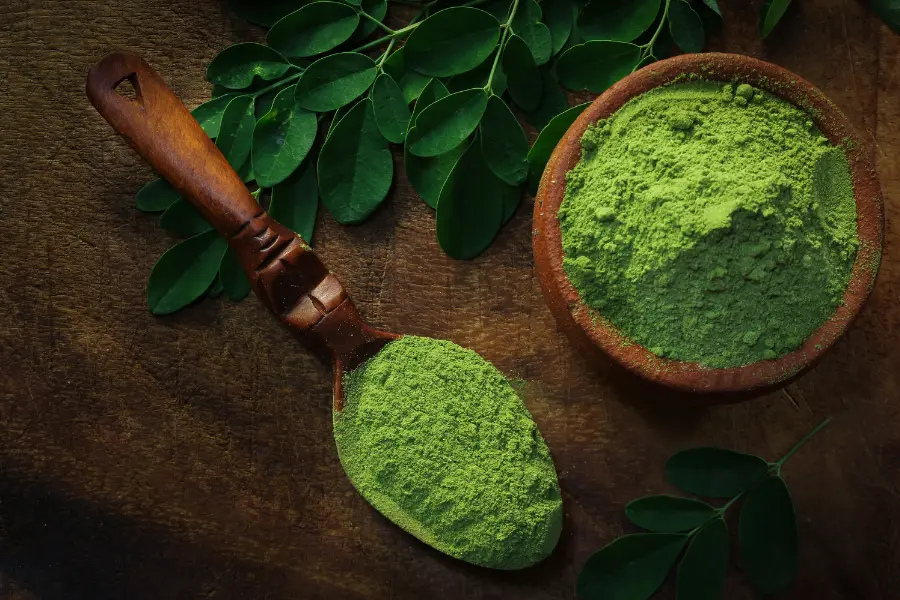
Premium Organic Moringa Powder Exporter from India
For importers seeking a bulk moringa powder supplier India, Moringa Powder Supplier helps turn a broad supplier search into a controlled sourcing process built around a written specification, batch-linked documents, and a retained approval sample.
Premium Moringa Powder | Bulk B2B Health Food Supplier
Identifying a reliable partner requires moving past generic marketing claims. A true B2B health food supplier operates under strict quality management systems tailored for international food safety, ensuring every shipment aligns with your finished product’s functional and regulatory demands.
Quick answer: how to source bulk moringa powder from India
Use this workflow to qualify supply before placing a commercial order:
B2B Sourcing Framework
Professional procurement teams rely on a structured, multi-step framework to mitigate import risks. This systematic approach guarantees that physical product quality perfectly matches documented safety standards before funds are transferred.
Request for Quotation (RFQ): Bulk Indian Moringa Leaf Powder
Start with an RFQ for Indian moringa powder. An RFQ, or request for quotation, is the buying document that tells suppliers exactly what to quote and prove. A one-line inquiry such as “Please send your best price” produces quotations that cannot be fairly compared. One supplier may quote conventional powder in a paper bag, while another quotes certified organic powder in lined cartons under different shipping terms.
Build the RFQ around the product your customer will actually receive. State whether you need food, supplement, cosmetic, or beverage-formulation use. Each use changes the documentation and risk profile.
Add the following fields to the RFQ:
- Botanical name and plant part: Moringa oleifera leaf powder
- Requested grade, mesh size, color range, moisture limit, and sensory standard
- Microbiological limits, including Salmonella status and total plate count
- Heavy-metal and pesticide testing expectations
- Organic claim requirements and certificate scope, if applicable
- Pack format, net weight per unit, total order volume, delivery term, and destination
Request both an FOB quotation and a clear production lead time. FOB makes the supplier responsible for export clearance and delivery to the named Indian port, while the buyer controls the main ocean freight booking. Read the practical implications before selecting a term in this guide to Incoterms for a first moringa powder import.
A useful RFQ also asks suppliers to separate one-time packaging or setup charges from the product quotation. Green Harbor receives one quote for plain 20 kg cartons and another for finished pouches. The comparison becomes clear because the packaging scope is clear.
How to qualify a bulk moringa powder supplier in India
A credible supplier can connect its quotation to the farm or collection area, processing facility, finished batch, and export paperwork. Ask for documents with dates, names, batch numbers, and scope. A generic PDF with no batch reference gives little purchasing control.
Verification & Traceability (The Basics)
Begin with the processing route. Leaf selection, washing, drying temperature, milling, sieving, foreign-material control, and packing conditions all influence the final powder. Indian shade drying can preserve a brighter green appearance when it is managed well, although color still needs a written acceptance range. See the operational factors behind the India shade-drying moringa advantage.
Then examine food-safety controls. Steam treatment may reduce microbial load, yet it also introduces a quality trade-off. Excess heat or moisture exposure can alter color, aroma, and moisture. Ask for the treatment parameters, validation approach, and the stage where treatment occurs. The supplier should explain how it prevents recontamination between sterilization and final sealing. This comparison of steam sterilization versus irradiation for moringa helps frame that conversation.
For Green Harbor, one Indian supplier submits a current organic certificate, a facility audit summary, and a COA from a named laboratory. A second supplier sends a product brochure and a low price, yet provides no recent lot report. The first supplier advances to sampling because its evidence supports traceability and verification.
Use this comparison framework for every candidate. For U.S. food importers, supplier verification belongs within the importer’s food-safety obligations. The FDA explains the requirements under its Foreign Supplier Verification Programs rule. Assign ownership for that review before goods are booked.
How to audit a moringa powder COA before approving supply
A certificate of analysis should identify the lot being shipped and show results against an agreed specification. Treat it as a batch record, not a marketing attachment.
Reading a Moringa Powder COA, Line by Line
First, match the supplier name, product name, lot number, manufacturing date, and sample date. Next, inspect each result for its unit and method. “Heavy metals: compliant” is weak evidence. A useful report identifies each metal, the measured result, applicable limit, method, and laboratory.
For leaf powder, total ash describes total mineral residue after ignition. It can be influenced by the plant’s natural mineral content and field conditions. Acid-insoluble ash is more useful for spotting soil, sand, or silica contamination because it measures the portion remaining insoluble in acid. Set limits in the purchase specification and evaluate both values together.
Microbiology deserves the same precision. A Salmonella result should identify the sample quantity and test method. In the United States, laboratories commonly use methods aligned with FDA’s Bacteriological Analytical Manual chapter on Salmonella. Ask the supplier which validated method its lab used and retain the result with the batch file.
Green Harbor finds that its preferred supplier’s sample COA shows moisture, total ash, acid-insoluble ash, total plate count, yeast and mold, E. coli, and Salmonella. The report lacks a pesticide screen, which Green Harbor needs for its retailer review. The buyer amends the RFQ rather than assuming that a general COA covers pesticide residues. Use this line-by-line guide to reading a moringa COA to set up your review sheet.
Step 1: Audit COA ➔ Step 2: Request 3rd-Party Lab Raw Data ➔ Step 3: Run In-House Testing on Pre-Shipment Sample ➔ Step 4: Approve Supply
Enforce this sequential testing protocol. Never advance to commercial payment without validating the supplier’s analytical data against an independent or in-house baseline evaluation.
COA Batch Report
NABL Accredited Lab Report • Pass: Heavy Metals • Pass: Microbials
VIEW/DOWNLOAD FULL PDF DOCUMENTMove from Indian moringa sample to commercial order
Samples establish whether the supplier can meet the physical and sensory standard. They also expose a frequent failure mode: the supplier sends a carefully selected sample while the commercial lot has a different color, particle size, or microbial result.
Match the Sample Specifications (The Benchmark)
Ask for a sample labeled with lot code, production date, and pack date. Keep a sealed reference portion after approval. Evaluate appearance, aroma, taste where appropriate for the intended use, flow, sieve behavior, and dispersion in your actual formulation. A bright powder that clumps badly in a ready-to-mix beverage may fail a product development requirement even when its laboratory results meet the specification.
Green Harbor runs the sample through its pouch filling test. The first sample bridges in the hopper because its particle distribution is finer than expected. The buyer updates the RFQ to state the desired mesh and acceptable fines range, then requests a second sample from the proposed production run. This extra step costs time, yet it avoids a 500 kg fill problem.
Before issuing the purchase order, attach the approved specification and identify:
- The approved sample lot and retained-sample procedure
- Required pre-shipment COA and any third-party laboratory release tests
- Final pack dimensions, net weight, pallet configuration, and label artwork
- Lot coding, shelf-life statement, and storage conditions
- Inspection rights, document deadline, payment milestones, and claim procedure
Protect quality during transit too. Powder can pick up moisture and odor if liners, seals, or container conditions are weak. Review the moringa powder shelf-life and storage requirements before setting the packaging specification.
Establish Commercial Contract & Payment Terms
A robust commercial contract locks in the agreed specifications and mitigates financial risk. Tie payment milestones strictly to document milestones—such as transferring the final balance only upon receipt of a compliant pre-shipment COA and draft Bill of Lading.
Bulk Packaging & Logistics
Logistical integrity is as important as the powder itself. Bulk export requires corrugated master cartons lined with heavy-duty HDPE food-grade bags to prevent hygroscopic moisture absorption during ocean transit. Demand clear documentation on palletization to avoid collapse inside the shipping container.
Moringa Powder Export from India: Requirements, Documents & Labels
Moringa Leaf Extract Labels: Regulations, Certifications
Customs authorities strictly scrutinize botanical imports. Your supplier must provide a Commercial Invoice, Packing List, Certificate of Origin, and a government-issued Phytosanitary Certificate. For extract labels and retail pouches, ensure all nomenclature complies with your local FDA or equivalent regulatory framework.
Confirm Destination-Specific Certifications
Different markets mandate unique compliance structures. If you are claiming organic status in the EU or US, the supplier must provide an Organic Transaction Certificate demonstrating NPOP equivalence to destination-specific standards.
Top 10 Countries Importing Moringa Powder from India
India is the global epicenter for Moringa oleifera cultivation. The top importing nations—including the United States, Germany, the UK, Canada, and Japan—rely heavily on Indian exporters due to the country’s optimal climatic conditions, advanced dehydration infrastructure, and capacity to produce pharmaceutical-grade botanical ingredients.
How Suppliers Ease Sourcing
Start by sharing the application, target market, pack format, required volume, and destination through the contact page. The sourcing brief can then define the powder grade, testing scope, packaging, and export terms before quotation.
Next, request an evaluation unit through the moringa powder samples page. Evaluate it against the same written criteria planned for the commercial order. When your project requires a specific grade, use the supplier’s moringa powder grade specifications as a starting point and add application-specific limits.
For the commercial stage, align laboratory documents, packaging, lead time, freight planning, and payment terms with the approved purchase specification. This keeps an inquiry from drifting between sales messages, detached COAs, and unapproved packaging assumptions. Buyers requiring a finished retail presentation can also review private-label moringa powder options before requesting artwork or pouch specifications.
Common Mistakes to Avoid
The most damaging sourcing errors usually begin before production. A buyer may accept a general COA, then discover that its retailer needs analyte-level results. Another buyer may approve a sample without stating whether it represents the commercial lot.
Avoid pricing comparisons that mix organic and conventional material, different mesh sizes, different microbiological limits, or different delivery terms. Each difference changes the supplier’s cost and your import risk.
Avoid using color as the only quality signal. Very green powder may look strong, yet buyers still need verified microbiology, contaminant control, traceability, and fit for the intended formulation. Use the moringa powder adulteration red flags to add identity and authenticity checks to your approval process.
Finally, give suppliers a document deadline before cargo release. A pre-shipment COA received after the container sails offers little control over an unsuitable lot. A qualified Indian supplier can provide more than a quotation. Build your order around measurable requirements, verified documents, and an approved sample, then move to commercial volume with the same controls in place.
Questions Suppliers Fail to Answer (FAQ)
Include botanical identity, leaf-powder grade, mesh, color and moisture limits, microbiological requirements, contaminant testing scope, organic status, pack format, order quantity, destination, requested Incoterm, and required documents. Attach your specification so every supplier quotes the same requirement.
Match the COA lot number to the sample or shipment lot, then check each result, unit, limit, method, laboratory identity, sample date, and report date. Confirm that the analytes cover your market and product application. Request clarification before approving any missing field.
Steam treatment can support microbial control when the process is validated for the product and packaging flow. Buyers should request treatment parameters, microbial results, moisture control procedures, and evidence that powder stays protected from recontamination after treatment.
The required panel depends on the destination and use. Many buyers request moisture, ash values, microbiological testing, heavy metals, and pesticide testing where relevant. Supplement, food, and cosmetic applications can each require different specifications and supporting documents.
Approve a batch-linked sample, use a signed purchase specification, retain a reference sample, require pre-shipment documents before release, and define inspection and claim terms in the purchase order. Start with a manageable volume that still represents normal production conditions.